
Respecting the Past. Living in the Present. Partnership for the Future.
Scotts Valley Band of Pomo Indians:

For generations, the Scotts Valley Band of Pomo Indians have fought to restore what was taken from them by unjust federal policies.
Like many tribes across California, Scotts Valley was rendered landless at the hands of the federal government, severing the Tribe from its land base. More than three decades after federal recognition was restored in 1991, the journey to reinstate the Tribe’s homeland was successful. The Tribe is now working to secure a brighter economic future as they develop their land. The foundation of its future has been an uphill battle.


Driving Economic Growth and Creating Jobs
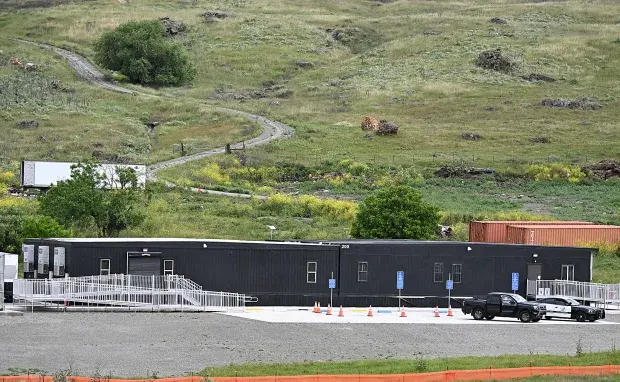
In January 2025, the Department of the Interior approved the Scotts Valley Band of Pomo Indians' land into trust application, marking a long-awaited homecoming. The Tribe has its sovereign homeland in Vallejo. Plans for the land include developing 24 units of tribal housing, an administration building, preserved open space, a community event venue, and a casino facility. In the meantime, plans to open a small preview casino with up to 100 machines will serve as a meaningful economic driver.

Honoring The Scotts Valley Band Heritage
This project represents a long-term partnership in Vallejo. It’s honoring their heritage and creating economic opportunity for the Vallejo community, building a future that strengthens families, supports local enterprises and helps the city thrive for generations to come.

Overcoming Obstacles
Today, Scotts Valley’s gaming eligibility remains intact while the Department of the Interior completes its review, allowing the Tribe to continue development on its land in Vallejo. While no court has issued any orders preventing or delaying the Tribe from moving forward with its project, Scotts Valley continues to face obstacles from a small number of outside tribes, who are using political operatives and their connections to try and put their own interests ahead of the Scotts Valley Tribe in Vallejo.

A History of Overcoming Adversity,
A Future Restored

Mid-1800s
The Scotts Valley Band of Pomo Indians faced enslavement, violence and displacement as settlers and government forces sought to claim their ancestral lands. Many were forced to leave the region for safety, and much of the local Patwin population was decimated following the Gold Rush.
1840s
During the nineteenth century, multiple tribes—including ancestors of the Scotts Valley Band—were present in the Napa, Sonoma, and Solano County regions as laborers on ranches and farms. This region was a complex ethnographic boundary zone influenced by Coast Miwok and Costanoan populations, later shaped by forced relocation and assimilation efforts by the government.
1851
The federal government sent agents to negotiate treaties with the Pomo Tribes. However, the U.S. Senate ultimately rejected the treaties and the Tribe had to cede their rights, title, and claim to land – including Vallejo and all of Solano County – in exchange for reservation land on the western shore of Clear Lake. The reservation was never established, leaving the Tribe landless. Under the unratified treaty, tribal members were brought to Vallejo for sustenance and work.
1911
The federal government established the Sugar Bowl Rancheria for the Scotts Valley Band in Lake County, California, granting approximately 56 acres of largely uninhabitable land with poor housing, limited water, and significant hardship.
1958
The land base was terminated. Federal policies, including the California Rancheria Termination Act of 1965, stripped the Tribe of its federal recognition and land base, leaving its members without a homeland for decades.
1972
The Tribe remained dispersed across the Bay Area, struggling to preserve its culture and identity, and in 1986, the Tribe fought back and sued the federal government for taking their homeland from them once again.
1991
Federal recognition was restored, but a land base was not returned, leaving the Tribe landless for more than a century.
January 2025
The Scotts Valley Band of Pomo Indians regained land for its members, marking a historic milestone after more than 100 years of perseverance, and the Tribe can finally return to the land of their ancestors. Scotts Valley is working to support economic development, build housing, and honor the community for tribal members, ensuring that their heritage thrives for generations to come.
Today
The Tribe continues to move forward on its land in Vallejo, which remains in trust. This land is more than acreage or boundaries on a map. It is a home – a sovereign place where our people can govern, build, and thrive.

A Foundation for Shared Prosperity
-
In November 2024, the Vallejo City Council and the Scotts Valley Band unanimously approved a cooperative agreement to collaborate and ensure the Tribe’s development project does not impose costs on taxpayers.
-
In September 2025, the City Council voted to negotiate a Memorandum of Understanding (MOU) for an interim development project.
-
In April 2026, the City Council approved the MOU. The Tribe aims to access city services, while fully covering associated costs and providing a net benefit to taxpayers. The MOU outlined an interim funding structure to more than offset near-term city costs while planning for long-term stability.

_gif.gif)

TIMES-HERALD
Vallejo council approves services for ‘very small casino operation’
Agreement with Scotts Valley Band of Pomo Indians is separate from much larger proposed $700 million casino.

DAILY REPUBLIC
Vallejo council considers casino project MOU worth $1M-plus
The City Council on Tuesday will consider an agreement with the Scotts Valley Band of Pomo Indians that could net the city more than $1 million over three years.

TIMES-HERALD
Shawn Davis: Scotts Valley Band ready to be Vallejo’s economic partner
Vallejo is a city defined by history and resilience, where generations of families worked hard to create opportunities for the next generation.